Taekwondo Training Techniques and Benefits
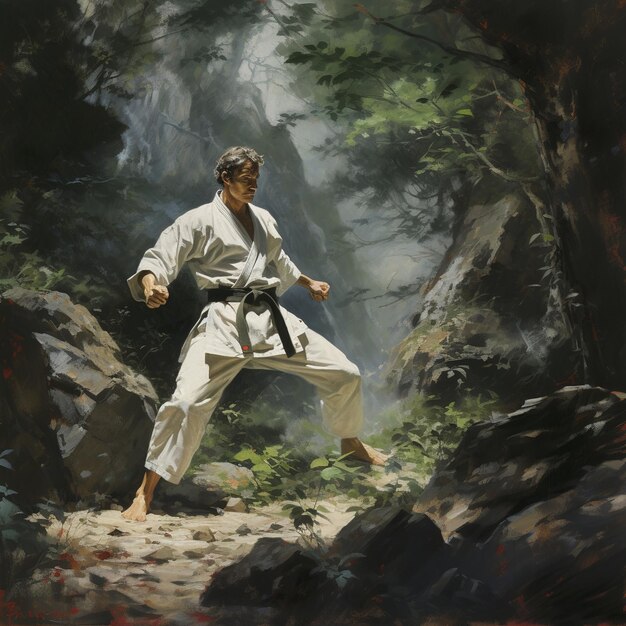
Taekwondo, the Korean martial art renowned for its high-flying kicks and intricate patterns, is not just a method of self-defense but a holistic discipline that builds character, confidence, and resilience. This martial art is a lifestyle, a journey that shapes both body and mind. Training in Taekwondo is an immersion into a discipline that fosters physical prowess, mental clarity, and an unwavering sense of self-worth.
At the heart of Taekwondo training are three essential elements: forms (poomsae), sparring (gyorugi), and self-defense techniques (hosinsul). These components intertwine to create a balanced training regimen that develops physical strength, agility, and mental focus.
Forms (Poomsae): Poomsae are predetermined patterns of movements that simulate combat scenarios. They are a test of precision, speed, and power. In every movement lies a story of Taekwondo's history and philosophy. As Korean practitioners often say, "품새는 우리의 전통을 이야기한다" ("Poomsae tells the story of our tradition").
Sparring (Gyorugi): Gyorugi is where theory meets practice. It’s a controlled environment that teaches practitioners timing, strategy, and adaptability. More than physical skills, sparring develops a fighter’s mental acuity under pressure.
Self-Defense Techniques (Hosinsul): Taekwondo goes beyond sport, focusing on practical techniques to protect oneself. Hosinsul emphasizes using an opponent’s force against them, showcasing the art's roots in self-preservation.
Consider the story of Hwang Kyung-seon, an Olympic gold medalist who overcame a serious injury to dominate the international stage. Her story reminds us that Taekwondo is not just about fighting opponents but also about battling inner doubts. She once said, "상처는 나를 더 강하게 만들었다" ("Injuries made me stronger").
Another example is Steven Lopez, the American Taekwondo legend, who trained tirelessly to achieve unprecedented success. His relentless dedication is a testament to the transformative power of Taekwondo.
Taekwondo’s inclusion in the Olympics has solidified its status as a global martial art. It’s practiced in over 200 countries, uniting millions under the banner of respect and discipline. Organizations like the World Taekwondo Federation (WTF) play a pivotal role in maintaining the sport’s integrity and promoting it worldwide.
Taekwondo is more than kicks and punches; it’s a lifestyle that nurtures both the body and the mind. Its training techniques, rooted in centuries-old traditions, offer a path to physical prowess and mental clarity. The benefits—be they in the form of confidence, resilience, or self-discipline—are timeless treasures.
As practitioners around the world lace up their doboks (uniforms) and tie their belts, they carry forward the legacy of this incredible martial art, echoing its core philosophy: **"태권도는 단순한 무술이 아니다. 그것은 삶의